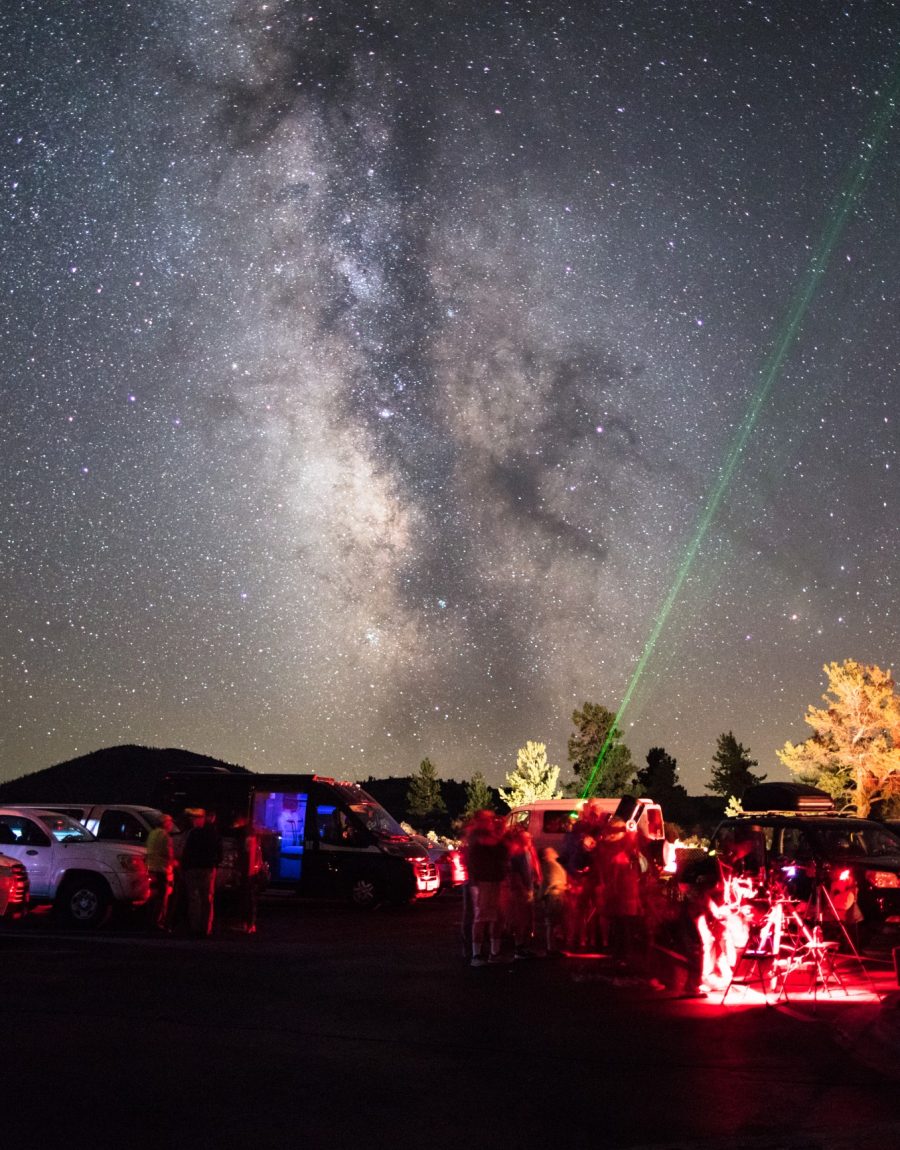
Our observation lawn sits at the highest cleared point on the property, away from the lodge’s own (deliberately minimal, fully shielded) lighting, and it’s the reason the property earned its Dark Sky Reserve certification in the first place — the site measures consistently below 21.8 magnitudes per square arcsecond on a Sky Quality Meter on a clear moonless night, which puts it solidly in Bortle class 1–2, the darkest classification the scale has.
We run two telescopes side by side: a 12-inch Dobsonian for deep-sky objects (star clusters, nebulae, and on a good night the Andromeda galaxy as more than a smudge) and an 8-inch reflector on a tracking mount for planets and the Moon when it’s up. Our staff astronomer walks the group through what’s actually overhead that specific night — the visible planets change month to month, and we’d rather point at what’s real tonight than run a scripted tour.
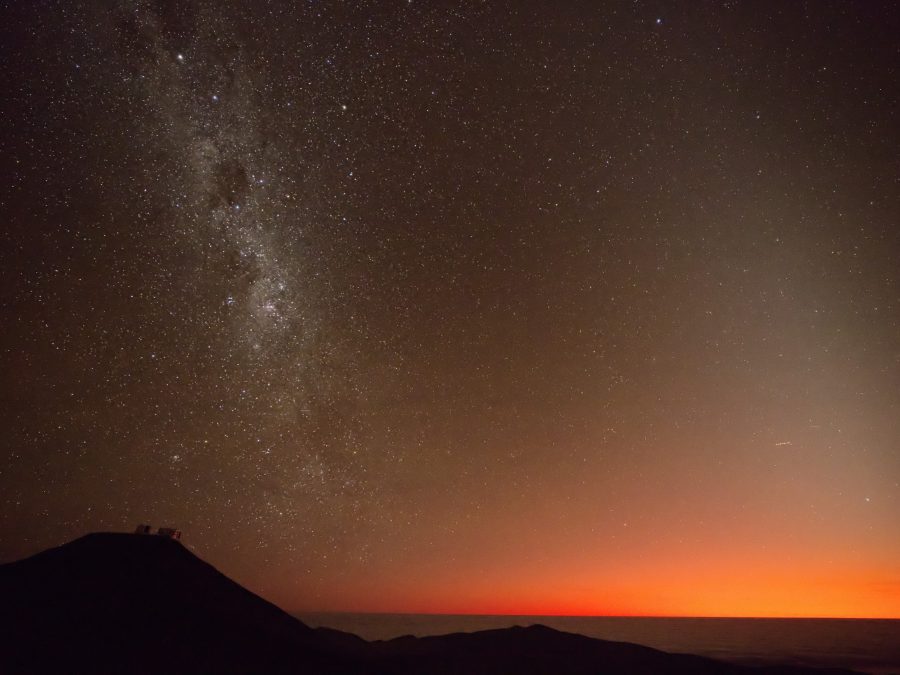
Reclining loungers face the zenith so you can watch naked-eye without a crick in your neck; the Milky Way’s core and dust lanes are visible without a telescope at all on a clear night, which surprises most first-time guests more than anything we show them through the eyepiece. Warm cider and blankets are provided; the lawn runs 8–10°F cooler than the lodge after dark even in summer.