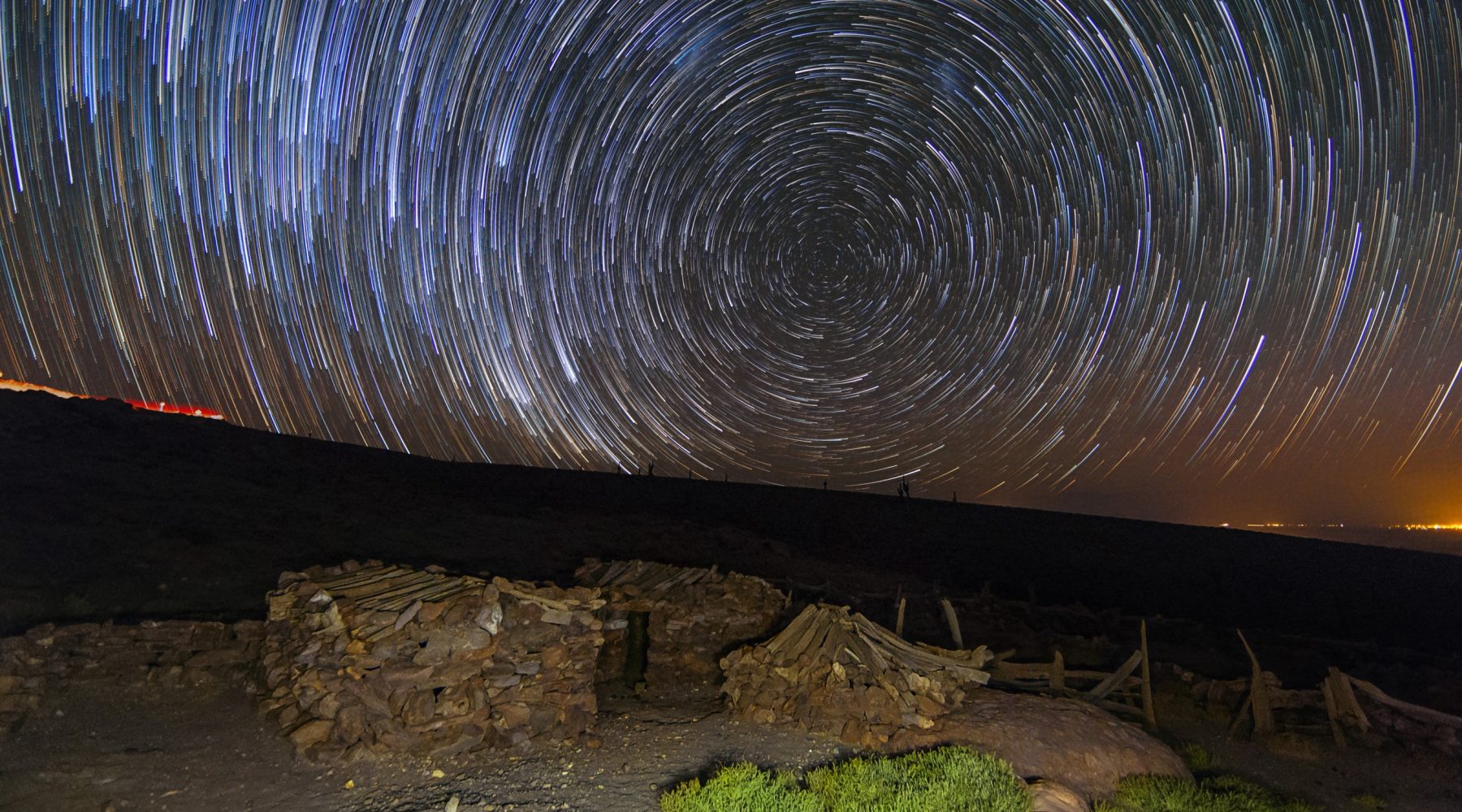
Dark Sky certification isn’t a marketing badge you apply for and get; it’s a measured standard, and getting there took us most of two years. The core metric is sky brightness, measured in magnitudes per square arcsecond (mag/arcsec²) with a handheld Sky Quality Meter, taken on multiple clear, moonless nights across different seasons rather than a single best-case reading. Our site consistently measures below 21.8 mag/arcsec², which places it in Bortle class 1–2 — the two darkest classifications on the nine-step Bortle scale, a scale most people encounter for the first time only once they start looking into dark-sky travel.
The harder part wasn’t the remoteness — we already had that — it was our own lighting. Certification requires a documented outdoor lighting management plan, not just naturally dark surroundings: every fixture on the property had to be fully shielded (light directed downward only, no uplight escaping to the sky), warm-temperature rather than cool-white, and on timers or motion sensors rather than left burning all night. We replaced every exterior fixture on the property, including ones that were, by any normal hospitality-industry standard, already dim and tasteful.
We re-measure and recertify periodically rather than treating the original certification as permanent, because sky darkness is measurably degradable — a single unshielded floodlight installed at a neighboring property, or on our own if a fixture failed and got replaced with the wrong one, would show up in the next reading.